
Totalitarian Quotes
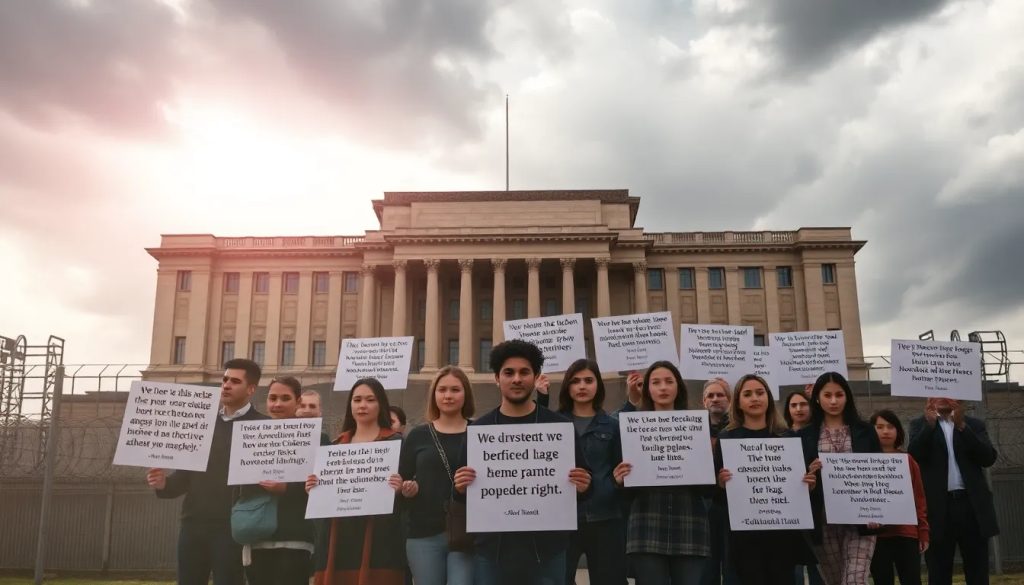
Quotes about totalitarianism carry the weight of history and the stark realities of oppressive regimes. They resonate with the human experience of living under such control, often serving as a powerful reminder of the fragility of freedom and the importance of vigilance in protecting democratic values.
These totalitarian quotes not only reflect the pain and suffering inflicted upon individuals but also illustrate the broader impact of such governance on society, philosophy, and social interaction.
- What are totalitarian quotes?
- How did George Orwell portray totalitarianism?
- What are some short totalitarian quotes?
- What quotes about totalitarianism are found in 1984?
- What are notable quotes from The Origins of Totalitarianism?
- How do totalitarian quotes reflect fascism?
- How readers can use quotes from this topic
- Related topics explored alongside totalitarianism
What are totalitarian quotes?
Totalitarian quotes are more than mere words; they are echoes of resistance, despair, and warning from those who have faced or contemplated the iron grip of oppressive governments. They capture the essence of a society where personal freedom is relinquished and the collective will is subjected to a singular authority.
People search for these quotes for emotional clarity and reflection, to gain insight into the experiences of those who have navigated such treacherous political waters. These quotes serve as beacons for those who seek to understand the depths of human resilience and the cost of silence in the face of autocracy.
The impact of totalitarianism on society is profound, chipping away at the bedrock of trust and communal values. The use of propaganda to indoctrinate and manipulate, the suppression of dissent, and the perversion of ideology to justify control are all common themes in these poignant sayings.
How did George Orwell portray totalitarianism?
George Orwell's work stands as a cornerstone in understanding the mechanisms and psychology of totalitarian regimes. He dissected the role of propaganda in totalitarian regimes, revealing how truth becomes malleable and how reality is shaped to sustain the all-powerful state.
In books like "1984" and essays detailing his experiences during the Spanish Civil War, Orwell highlighted the chilling effects of unchecked power on personal freedom. He underscored the necessity of critical thinking and the courage to maintain political integrity even when it is most at risk.
Orwell's influence remains timeless, as his vivid depictions of totalitarianism continue to offer lessons about the dangers of complacency and the enduring human spirit's capacity to resist oppression.
What are some short totalitarian quotes?
- "Freedom is the freedom to say that two plus two make four. If that is granted, all else follows." - George Orwell
- "The object of persecution is persecution. The object of torture is torture. The object of power is power." - George Orwell
- "In a time of deceit, telling the truth is a revolutionary act." - Attributed to George Orwell
These succinct expressions distill the essence of the totalitarian experience—where reality is subverted and the individual's voice is suppressed. They stand as reminders of the value of truth and the inherent rights every person should possess, regardless of the regime under which they live.
What quotes about totalitarianism are found in 1984?
"1984," Orwell's masterpiece, offers a chilling exploration of totalitarianism. It presents a society where historical examples of totalitarianism are not just academic studies but lived realities. Quotes from this novel continue to be referenced as they encapsulate the core elements of such a regime—surveillance, thought control, and the annihilation of truth.
Phrases like "War is peace. Freedom is slavery. Ignorance is strength." and "Big Brother is watching you." are not mere literary constructs but stark representations of the psychological manipulation in politics that enable totalitarianism to thrive.
What are notable quotes from The Origins of Totalitarianism?
Hannah Arendt's "The Origins of Totalitarianism" provides a deep dive into the structures and methodologies of oppressive regimes. It features insightful observations such as "Totalitarian movements are mass organizations of atomized, isolated individuals," and "Ideology is peculiar in that it pretends to possess either the key to history, or the solution for all the 'riddles of the universe,' or the intimate knowledge of the hidden universal laws which are supposed to rule nature and man."
These quotes reflect on the impact totalitarianism has on the human condition and society, dissecting the ways in which such regimes attain and maintain power.
How do totalitarian quotes reflect fascism?
Fascism, a form of radical authoritarian nationalism, is often closely associated with totalitarianism. The quotes from those who lived under or studied these regimes reveal the dark reality of fascistic governance, where individual liberty is crushed under the weight of the state.
They show how fascism uses nationalistic fervor and fear to justify oppressive measures and how it can lead to extreme forms of resistance against totalitarianism. Through these reflections, one can discern the markers of such regimes and the universal human striving for freedom and dignity.
How readers can use quotes from this topic
Quotes on totalitarianism can be a powerful tool for personal and educational purposes. They can spark dialogue, serve as prompts for reflection or writing exercises, and provide a historical context for understanding current events. Using these quotes in journaling or as part of a curriculum enhances personal growth and societal awareness.
By sharing these quotes on social media or in discussions, individuals contribute to the preservation and dissemination of knowledge that is crucial for the collective memory of humanity's struggles against oppression.
Related themes include: oppressive regimes, historical examples of totalitarianism, psychological manipulation in politics, resistance against totalitarianism, and political integrity. Each of these facets offers a unique lens through which to examine the complex tapestry of control and subjugation inherent in totalitarian states.
Exploring these related topics provides a more comprehensive understanding of the reasons why safeguarding freedom and democracy is essential. It shines a light on the past, informing current generations of the signs and consequences of such governance, and inspires action to prevent its resurgence.
In conclusion, the exploration of totalitarian quotes reveals the enduring impact of oppressive regimes on the human spirit and the collective conscience. They remind us of our responsibility to safeguard the freedoms that have been hard won and to remain vigilant against the encroachment of tyranny. Through these poignant words, we remember the past and are inspired to shape a future where individual dignity and freedom are paramount.
Recommended: