
William Halsey
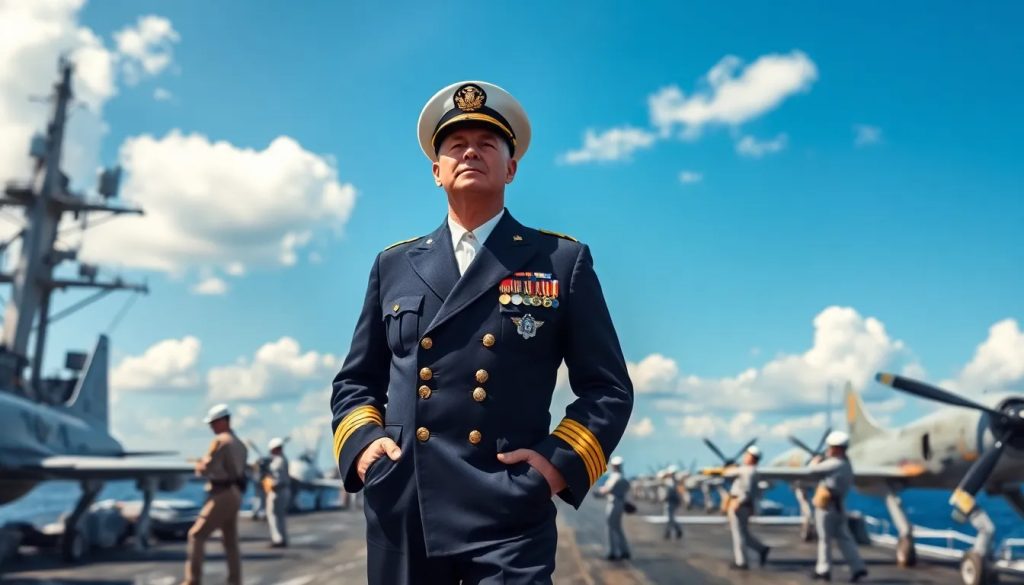
The enduring legacy of William Halsey is a testament to the indelible mark he left on military history and naval strategy. Known for his bold tactics and leadership during World War II, Halsey's quotes continue to inspire and educate those studying military leadership and history.
Who was William Halsey?
Admiral William Halsey was a pivotal figure in the United States Navy during a time of global upheaval. His career spanned both World Wars, where his strategic decisions and combative prowess earned him a revered place in military annals.
Halsey's biography reads like a chronicle of twentieth-century naval warfare, marked by rapid technological advances and the unprecedented scale of naval operations.
His relentless pursuit of victory in the Pacific Theater positioned him as a quintessential example of American military leadership.
What were the major accomplishments of William Halsey?
Throughout his illustrious military career, William Halsey achieved numerous milestones that would define naval capabilities for decades to come. His command of the Third Fleet demonstrated an exceptional blend of aggression and prudence.
- Victorious leadership in major battles like Leyte Gulf and Guadalcanal.
- Pioneering the use of carrier-based aircraft in naval warfare.
- His strategic vision was instrumental in breaking Japanese naval dominance in the Pacific.
Halsey's tenure is marked by a series of successes that stand as a testament to his strategic acumen and decisiveness.
William Halsey's approach to naval strategy during World War II was groundbreaking. His use of aircraft carriers as the centerpiece of naval power fundamentally changed the face of naval combat.
His conviction for offensive action and the need for speed and surprise in naval engagements shaped modern naval doctrine.
Halsey's emphasis on flexibility and adaptability in strategy enabled the Pacific Fleet to capitalize on the enemy's weaknesses effectively.
What is the cause of death of William Halsey?
On August 16, 1959, at the age of 76, William Halsey passed away. His death was attributed to a heart attack, a common cause of death for men of his age during that period. Halsey's passing marked the end of an era for the United States Navy and left a void in the annals of military leadership.
When did William Halsey, Jr. pass away?
Admiral William F. Halsey, Jr., also known as "Bull" Halsey, left a legacy as enduring as his influence on naval strategy when he passed away in 1959. His leadership during some of the most pivotal battles of the Second World War solidified his place in history.
What role did William Halsey play in the Pacific Fleet?
The role of William Halsey in the Pacific Fleet was integral to the Allied victory in the Pacific. As a fleet admiral, he commanded the South Pacific Force and South Pacific Area and later the Third Fleet, contributing significantly to the ultimate downfall of Japanese naval power. His aggressive strategy and willingness to take risks were key factors in the success of the Pacific campaigns.
- Leader of the Pacific Fleet's offensive operations against the Japanese Empire.
- Instrumental in transitioning the role of battleships to support aircraft carriers.
- His leadership led to several crucial victories that boosted Allied morale and positioned the United States as a dominant naval power.
Halsey's impact on the Pacific Fleet was profound and lasting, shaping the course of the war and the future of naval operations.
As we reflect on the contributions of Admiral William Halsey to military history, his insights into leadership, strategy, and resilience continue to resonate. For further exploration of related themes and figures who shaped the course of history, delve into the legacies of other prominent World War II leaders and military strategists.