
William Herschel
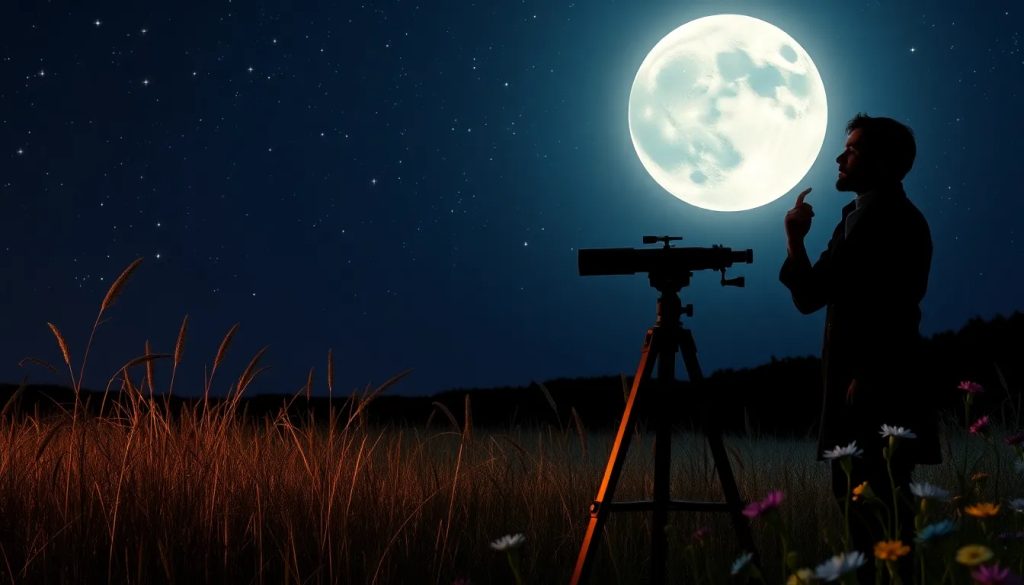
Within the vast expanse of the cosmos, certain names resonate across the centuries for their monumental contributions to our understanding of the stars. William Herschel remains a luminary figure, whose quotes continue to echo through the ages, not just for their poetic resonance but for the pioneering spirit they encapsulate.
Why do Herschel's words still captivate us? Perhaps it's the way they reflect a boundless curiosity and a relentless pursuit of knowledge—a testament to the enduring human fascination with the universe. His insights laid the very foundations of astronomy as we know it, crafting a legacy that reaches far beyond the stars he so diligently observed.
- At a Glance
- Core Ideas in William Herschel's Quotes
- William Herschel's Most Representative Quotes
- Practical Ways to Use Herschel's Quotes
- Authors Often Compared to William Herschel
- How Did William Herschel Discover Uranus?
- What Role Did Caroline Herschel Play in William Herschel's Discoveries?
- What Innovations Did William Herschel Introduce in Telescope Design?
- How Did William Herschel Contribute to the Study of Infrared Radiation?
- What Legacy Did William Herschel Leave in Astronomy?
- How Did William Herschel's Work Influence Modern Astrophysics?
At a Glance
- Historical period: Late 18th to early 19th century
- Field: Astronomy
- Main themes: Discovery, exploration, and innovation
- Resonance: Herschel's words inspire due to his role as a transformative figure in the field of astronomy
Core Ideas in William Herschel's Quotes
Herschel's musings often touched upon the sheer immensity of the universe and humankind's place within it. His quotes convey themes of:
- Discovery: The thrill of uncovering the previously unknown, as when he found Uranus, changing our celestial maps forever.
- Innovation: The ingenuity in crafting telescopes that could peer deeper into space than ever before.
- Collaboration: His teamwork with his sister Caroline, demonstrating the power of shared intellectual pursuit.
- Scientific method: His dedication to systematic study and observation, creating a legacy that would inform future generations.
- Awe: The sense of wonder and humility before the cosmos, a feeling that permeates his words and encourages reflection on our part in the grand tapestry of existence.
William Herschel's Most Representative Quotes
In the quotes below, we see not just a man who looked at the stars, but one who saw a universe of possibility. Herschel's words often reflect his deep commitment to understanding the cosmos, offering insights that go beyond mere observation. He pondered on the nature of our solar system, the potential for life beyond Earth, and the mechanics of celestial bodies—themes that still captivate us today.
When reflecting upon his most famous discovery, Herschel remarked on the importance of diligent observation and the joy of uncovering something entirely new—feelings that resonate with anyone who has ever dared to chase a dream or venture into the unknown.
Practical Ways to Use Herschel's Quotes
- In reflection on the enormity of the universe and our place within it
- As inspiration for leadership that values discovery, perseverance, and vision
- To foster creativity when facing the seemingly impossible
- As encouragement for resilience in the pursuit of knowledge
- For enhancing personal growth through a deeper understanding of the natural world
Exploring more on related themes:
- Galileo Galilei: Another titan of astronomy, whose observations revolutionized our understanding of the solar system.
- Isaac Newton: His work in physics and understanding of gravity have parallels in Herschel’s studies of celestial mechanics.
- Edwin Hubble: Much like Herschel, Hubble expanded our conception of the universe, introducing the idea of an expanding cosmos.
How Did William Herschel Discover Uranus?
On a clear March night in 1781, Herschel’s meticulous scrutiny of the sky revealed a celestial body behaving unlike any known star. This methodical approach and a bespoke telescope design culminated in the serendipitous discovery of Uranus, the first planet found with a telescope. Herschel’s initial belief that it was a comet was soon revised, expanding the known boundaries of our solar system and earning him lasting acclaim.
What Role Did Caroline Herschel Play in William Herschel's Discoveries?
Caroline Herschel’s role cannot be overstated; she was both an assistant and an accomplished astronomer in her own right. Her diligent note-taking, meticulous calculations, and her own discoveries of comets and nebulae were instrumental to William’s work. Their collaboration underscores the notion that great scientific achievements are often a team effort.
What Innovations Did William Herschel Introduce in Telescope Design?
Herschel's telescope innovations were a game-changer in astronomy. He improved the design of reflector telescopes, increasing their size to capture more light and thus revealing the faintest stars. His 40-foot telescope was a marvel of the age, allowing deeper forays into the mysteries of the night sky.
How Did William Herschel Contribute to the Study of Infrared Radiation?
The discovery of infrared radiation was a byproduct of Herschel’s inexhaustible curiosity. While studying sunlight, he found that different colors of light held different temperatures and that warmth persisted beyond the red part of the spectrum. This led to the realization of an invisible form of light, a foundational concept in physics and astronomy.
What Legacy Did William Herschel Leave in Astronomy?
Herschel’s legacy in astronomy is profound. His cataloging of celestial objects formed the bedrock for future classification. The revelation of infrared radiation unlocked new methods to study the universe. His insights into the dynamics of stellar systems propelled forward the understanding of the cosmos' structure and evolution.
How Did William Herschel's Work Influence Modern Astrophysics?
The ripples of Herschel’s work can be felt throughout modern astrophysics. His methodologies in stellar observation set standards still adhered to today. The concept of celestial mechanics he pioneered remains a cornerstone of astrophysical theory, and his discovery of Uranus inspired subsequent generations to gaze skyward, seeking new worlds.