
William Howard Taft
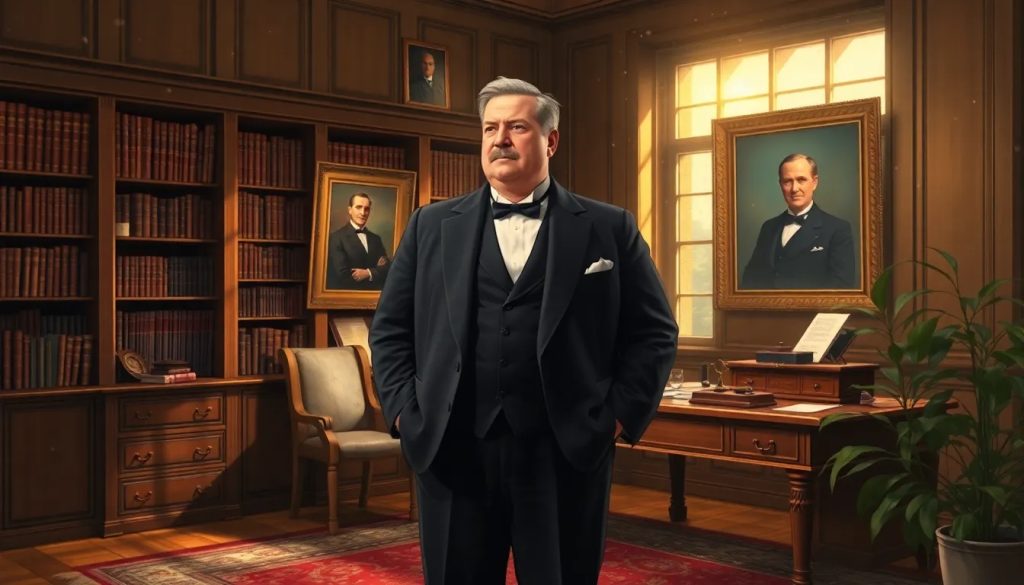
Throughout history, certain figures leave a lasting imprint due to their unique contributions to national leadership. William Howard Taft is one such figure, whose quotes and actions continue to resonate within American political and judicial spheres. His words often reflect the significant tensions and reforms of the early 20th century, offering insight into the challenges of his presidency and his tenure as Chief Justice.
- How Did William Howard Taft Contribute to American Politics?
- What Was William Howard Taft's Early Life Like?
- What Were the Major Policies of William Howard Taft's Presidency?
- How Did William Howard Taft's Weight Impact His Public Image?
- What Are the Key Achievements of William Howard Taft as Chief Justice?
- Was William Howard Taft Considered a Good President?
- What Is the Legacy of William Howard Taft in American History?
How Did William Howard Taft Contribute to American Politics?
The political landscape of the United States was significantly shaped by William Howard Taft. His presidency focused on antitrust legislations and tariff reforms, aiming to continue the progressive policies of his predecessor, Theodore Roosevelt. Despite facing resistance, Taft's legal approach to politics set precedents that have influenced American governance long after his term ended.
Taft's presidency was marked by a commitment to lawful intervention in economic affairs. He brought 90 antitrust suits, significantly more than Roosevelt, and his administration saw the passage of the Mann-Elkins Act, which expanded the powers of the Interstate Commerce Commission. These actions demonstrated his firm belief in the importance of legal frameworks in governing economic practices.
However, Taft's commitment to following the Constitution and legal precedent often put him at odds with the more radical elements within the Progressive Party. This divergence ultimately led to a rift with Roosevelt and was a contributing factor in the split of the Republican party, leading to Taft's defeat in his bid for a second term.
What Was William Howard Taft's Early Life Like?
Born in 1857, William Howard Taft's educational background was rooted in excellence and ambition. He attended Yale University and graduated second in his class before returning to Cincinnati to attend law school. His early life was characterized by an intense dedication to learning and a clear trajectory toward public service, which paved the way for his future in politics and law.
Following his education, Taft commenced a legal career that quickly transitioned into public service roles, which included serving as a judge, as the U.S. Solicitor General, and as the Governor-General of the Philippines. These roles not only enhanced his legal expertise but also provided him with valuable administrative experience.
What Were the Major Policies of William Howard Taft's Presidency?
The major policies of William Howard Taft's presidency challenged the status quo and aimed to refine the workings of government and economy. His notable efforts include:
- The Payne-Aldrich Tariff Act, which began as a reduction of tariff rates but eventually became a complex piece of legislation met with both support and opposition.
- His advocacy for a constitutional amendment to allow for the levy of an income tax, which reflected his progressive leanings and recognition of the evolving economic landscape.
- Significant progress in civil service reform, which helped to professionalize the federal workforce and reduce the impact of political patronage.
While some of his policies were viewed as conservative compared to Roosevelt's, Taft's diligent work in antitrust enforcement and his efforts to maintain a balance between business interests and regulatory measures were crucial aspects of his domestic agenda.
How Did William Howard Taft's Weight Impact His Public Image?
One of the more personal challenges faced by Taft was the public perception surrounding his weight. At over 300 pounds, he was the heaviest president, which often overshadowed his political accomplishments. Despite the public's fascination with his size, William Howard Taft continued to focus on his duties, though he also made efforts to address his health, recognizing the importance of well-being for effective leadership.
Tales of Taft's struggles with bathtubs are a part of presidential folklore, illustrating the intersection of personal challenges and public life. Nonetheless, his weight did not deter him from successfully executing the office of president and later serving as Chief Justice, where his intellectual prowess, not his physical stature, defined his tenure.
What Are the Key Achievements of William Howard Taft as Chief Justice?
William Howard Taft's contributions to the Supreme Court are among his most enduring legacies. After his presidency, he achieved his lifelong ambition of serving as Chief Justice, where he:
- Advocated for and oversaw the construction of the Supreme Court building, giving the judiciary its own home separate from the Capitol for the first time.
- Played a crucial role in modernizing the administration of justice, including efforts to clear the backlog of cases and improve the efficiency of the court system.
- Presided over cases that shaped federal power and property rights, reflecting his conservative approach to the Constitution.
His tenure as Chief Justice solidified his reputation as a principled jurist dedicated to the integrity of the judiciary and the orderly interpretation of the law.
Was William Howard Taft Considered a Good President?
The question of whether William Howard Taft was a good president is often subject to historical debate. While his administration confronted significant political challenges and his policies sometimes sparked controversy, his commitment to the rule of law and his judicial legacy are frequently cited as indicators of his dedication to public service and governance.
Although he was not as charismatic as Roosevelt and faced criticism from within his own party, Taft's presidency was marked by a steadfast application of his legal expertise to the challenges of governing. His later reflections on his presidency reveal a man who, despite the hardships, earnestly worked to uphold his vision of executive responsibility.
What Is the Legacy of William Howard Taft in American History?
The legacy of William Howard Taft in American history is multifaceted. His tenure as president and Chief Justice reflect his profound impact on both the executive and judicial branches. Notably, Taft is remembered for:
- His judicial philosophy, which emphasized restraint and a strict interpretation of the Constitution.
- His leadership in antitrust enforcement, which set the stage for further regulation of corporations in the interest of fair competition and consumer protection.
- The significant reforms he championed both as president and Chief Justice, which continue to influence American legal and political systems.
While his presidency may have been overshadowed by the dynamic tenure of Theodore Roosevelt, Taft's achievements, particularly in the realm of law and judicial administration, have earned him a respected place in the annals of American history.