
William J. Brennan, Jr.
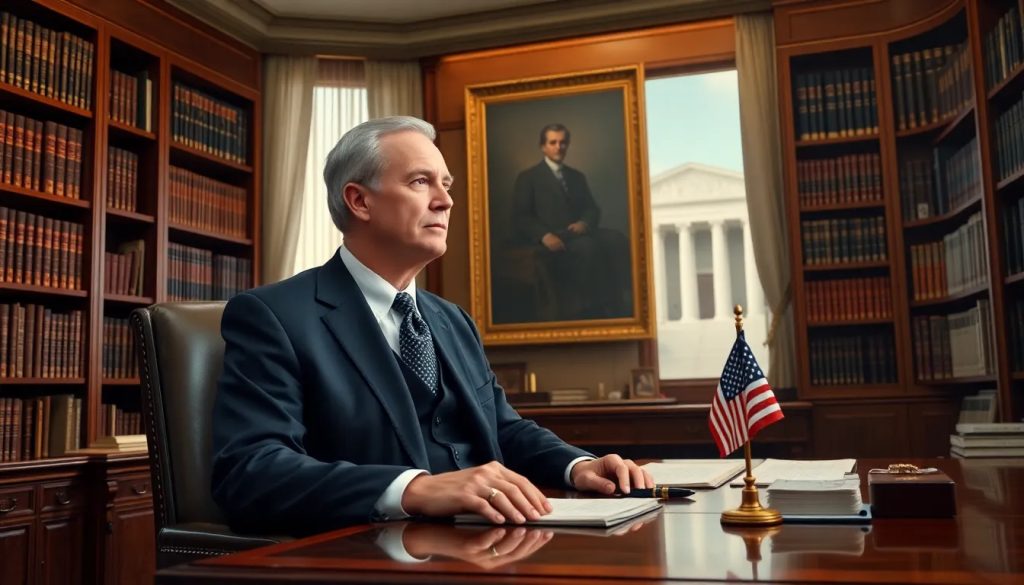
The enduring relevance of William J. Brennan, Jr.'s quotes is a testament to the profound impact he had on American jurisprudence. His words continue to inspire and provoke thought on matters of justice, equality, and civil liberties, reflecting a legal philosophy that deeply values human dignity.
- At a glance
- Core ideas in William J. Brennan, Jr.'s quotes
- William J. Brennan, Jr.'s impactful Supreme Court decisions
- William J. Brennan, Jr.'s educational background and its influence
- William J. Brennan, Jr.'s political philosophy
- The Brennan Center for Justice and its mission
- Practical applications of William J. Brennan, Jr.'s quotes
- Authors related to William J. Brennan, Jr.
At a glance
- Historical period: Mid-20th century
- Field/Role: Associate Justice of the Supreme Court of the United States
- Main themes: Civil rights, democracy, equality under the law
- Resonance: His quotes reflect a commitment to a "living Constitution" that evolves to meet contemporary society's needs.
Core ideas in William J. Brennan, Jr.'s quotes
The themes that permeate Justice Brennan's quotes are as varied as they are significant. Among them, the concept of a "living Constitution" stands out, reflecting his belief that the law must adapt to changing times. His advocacy for individual rights, especially in areas of free speech and equal protection, underscored his dedication to ensuring that every person's dignity is respected within the legal system.
Another recurring idea is his focus on the human elements of justice. Brennan often emphasized that the law is not an abstract concept but a mechanism that affects individuals' lives. His quotes reflect an unwavering commitment to social justice and the well-being of society's most vulnerable members.
Lastly, Brennan's wisdom touched on the critical role of the judiciary in safeguarding democratic values. He believed in a robust judicial system that can protect citizens from governmental overreach and uphold constitutional rights.
William J. Brennan, Jr.'s impactful Supreme Court decisions
Justice Brennan's time on the Supreme Court was marked by a series of landmark decisions that shaped American law. He had a hand in cases that transformed voting rights, expanded freedom of the press, and advanced the civil rights movement. His opinions in these cases often emphasized the importance of protecting the marginalized and ensuring that the Constitution served as a shield against injustice.
Among the most notable cases was Baker v. Carr, which established the principle of "one person, one vote," significantly impacting the country's political landscape. In New York Times Co. v. Sullivan, Brennan wrote the majority opinion that laid the foundation for modern free press laws, protecting journalists and fostering a vibrant public discourse.
Brennan's judicial philosophy shone through his decisions, highlighting his belief in an evolving Constitution that must respond to contemporary challenges. This philosophy continues to influence debates on constitutional interpretation today.
William J. Brennan, Jr.'s educational background and its influence
Justice Brennan's rich educational experiences at the University of Pennsylvania and Harvard Law School equipped him with a formidable legal foundation. His education not only provided him with technical legal expertise but also exposed him to diverse viewpoints and the importance of considering the broader societal implications of legal decisions.
His tenure at Harvard, in particular, instilled in him a sense of the law's potential as a tool for societal change. Brennan's legal philosophy was undoubtedly shaped by these formative educational experiences, which fostered his later work as a champion of civil liberties and judicial reform.
William J. Brennan, Jr.'s political philosophy
Brennan's political philosophy was characterized by his belief in the power of the law to promote social justice and his view of the Constitution as a living document. He often stressed the need for the law to be adaptable, ensuring that it remains relevant and serves the needs of a changing society.
His dedication to democratic values and constitutional rights guided his approach to controversial issues, and his opinions on the Court often reflected a deep concern for the individual's role in democracy. This approach made him a pivotal figure in the Supreme Court's history, influencing American legal thought for generations.
The Brennan Center for Justice and its mission
The Brennan Center for Justice was founded to carry on the legacy of Justice Brennan's commitment to equality and justice. The Center's mission reflects his lifelong dedication to improving the judicial system and protecting individual rights. It focuses on promoting fair elections, advancing civil liberties, and advocating for reforms that make America's justice system more inclusive and equitable.
Through its work, the Brennan Center aims to ensure that the values Justice Brennan championed continue to have a lasting impact on American society.
Practical applications of William J. Brennan, Jr.'s quotes
- Reflection: His quotes provide a starting point for considering the role of justice in society.
- Journaling: Using his words to inspire daily thoughts on law, ethics, and human rights.
- Leadership: Brennan's wisdom on democracy can guide ethical decision-making in leadership roles.
- Creativity: His views on constitutional interpretation can inspire innovative thinking in legal practices.
- Resilience and personal growth: His life's work exemplifies perseverance in the face of challenges.
Justice Brennan's influence and ideas can be seen in the work of other legal scholars and justices. For example, Thurgood Marshall, another Supreme Court Justice, shared a similar dedication to civil rights and equality. Both advocated for a judiciary that serves as a guardian of individual freedoms.
Oliver Wendell Holmes, Jr., known for his concept of "legal realism," also believed in the evolving nature of law, a theme echoed in Brennan's opinions.
Finally, Ruth Bader Ginsburg followed in Brennan's footsteps, advancing gender equality and the rights of the disenfranchised, illustrating the enduring influence of his judicial philosophy.