
William Jennings Bryan
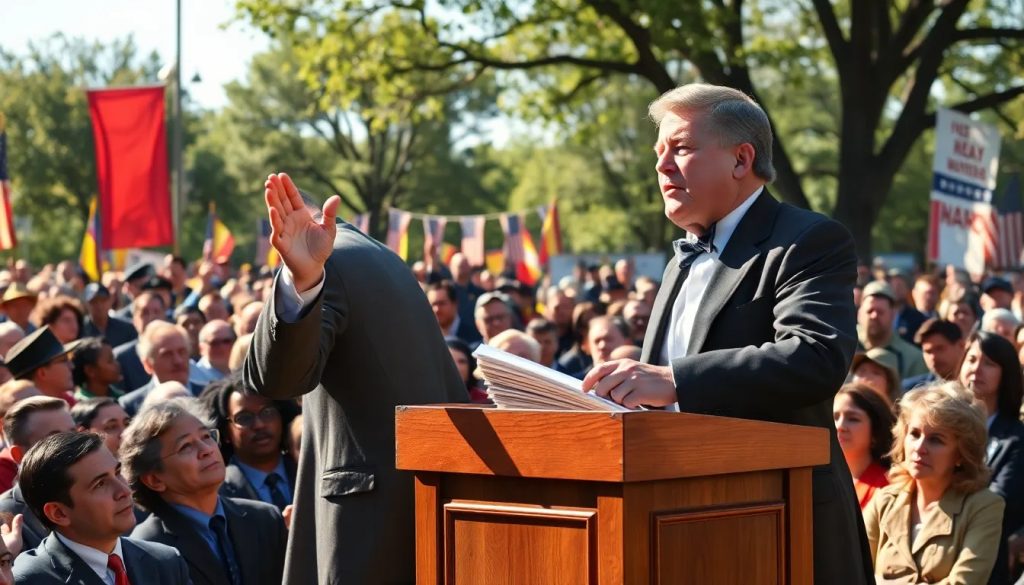
The enduring legacy of William Jennings Bryan is marked by his eloquent oratory and his unyielding commitment to the ideals of democracy. His words continue to resonate in the American collective memory, invoking the spirit of progressivism and the fight for the common man's rights. In an age where his speeches still echo in the halls of history, Bryan's quotations remain as relevant as ever, offering insight into the character of a man who shaped the politics of his time.
At a Glance
- Historical period: Late 19th and early 20th centuries
- Field or role: Politician, Orator, Secretary of State
- Main themes: Democracy, Populism, Anti-imperialism
- Resonance: Advocacy for the underprivileged and stance against Darwinism
Core Ideas in Bryan's Quotes
William Jennings Bryan is revered for a plethora of quotes that encapsulate his core beliefs and ideologies. His speeches often revolved around the inherent value of the common individual and the importance of a government that serves its people.
One of the recurring themes in his quotes is the advocacy for the silver standard, which he believed would free the common man from the oppression of the gold standard and the banking elites. Additionally, his fervent opposition to imperialism and war painted him as a champion of peace and sovereign equality among nations.
Bryan's defense of Christian faith against the theory of evolution, most famously at the Scopes Trial, remains a testament to his strong religious convictions. His words often reflect a harmonious vision of society, unmarred by the conflicts that Darwinist ideas might introduce.
His vision of democracy as a system of equal opportunity and his push for progressive reforms, like the direct election of senators, underscored his belief in an America governed by its people rather than its corporations. Bryan's quotes continue to inspire those who seek to understand the heart of America's populist traditions.
Notable Quotations and Their Context
The quotes below offer a glimpse into the mind of a man who was as much an idealist as he was a realist. William Jennings Bryan's oratory skills shone through in his delivery and his ability to connect with his audience on a personal level.
From his impassioned "Cross of Gold" speech that advocated for bimetallism to his stances on democracy and equality, Bryan's words carried the weight of his convictions. These quotations do not merely represent fleeting thoughts but instead form the bedrock of his philosophical and political viewpoints.
His eloquent defense of the farmer and the laborer, for example, showcases his dedication to the plight of the working class and his belief in a fairer economic system. Bryan's quotes are a reflection of the American spirit, soaked in the values that he held dear.
Practical Applications of Bryan's Quotes
- Reflection: Considering the ethical and moral implications of political policies.
- Journaling: Drawing inspiration from his ideals to explore personal beliefs.
- Leadership: Adopting his stance on equality and justice to inspire others.
- Creativity: Using his eloquent speech as a model for effective communication.
- Resilience: Learning from his perseverance despite political defeats.
- Personal Growth: Embracing the principles of continuous improvement and service to others.
Those who find themselves drawn to the quotes and ideals of William Jennings Bryan may also appreciate the works of authors such as Thomas Jefferson for his foundational views on democracy, or Theodore Roosevelt for his progressive stance and advocacy for the common man. Both men, in their own times, contributed significantly to the fabric of American politics and share thematic parallels with Bryan's philosophy.
Similarly, readers may explore the writings of Henry George, who, like Bryan, challenged economic inequalities, and advocated for a "single tax" on land. His works echo Bryan's populist sentiments and concern for social justice.
The life and career of William Jennings Bryan are woven into the tapestry of American history. His role as Secretary of State and his influence on the Democratic Party during pivotal moments in the nation reveal a man of principle and passion. His contributions to democracy and his stance on issues such as women's suffrage and farmers' rights continue to be studied and admired by those who seek to understand the evolution of American political thought.
However, it was not just in politics that Bryan made his mark; his strong opposition to the Darwinian evolution theory and his participation in the Scopes Trial revealed the depth of his religious convictions. This trial would come to symbolize the struggle between modernist and traditionalist worldviews in America, a debate that Bryan was deeply entrenched in.
While Bryan never achieved his ambition of becoming President, his influence on American politics and his legacy as a populist leader are unquestionable. Through his speeches and actions, Bryan embodied the hopes and concerns of many Americans during a time of great change. Even today, his words continue to inspire those who seek justice, equality, and a true representation of the democratic spirit.
Explore more on related themes: American diplomacy, Progressive politics, Anti-imperialism.