
William Kidd
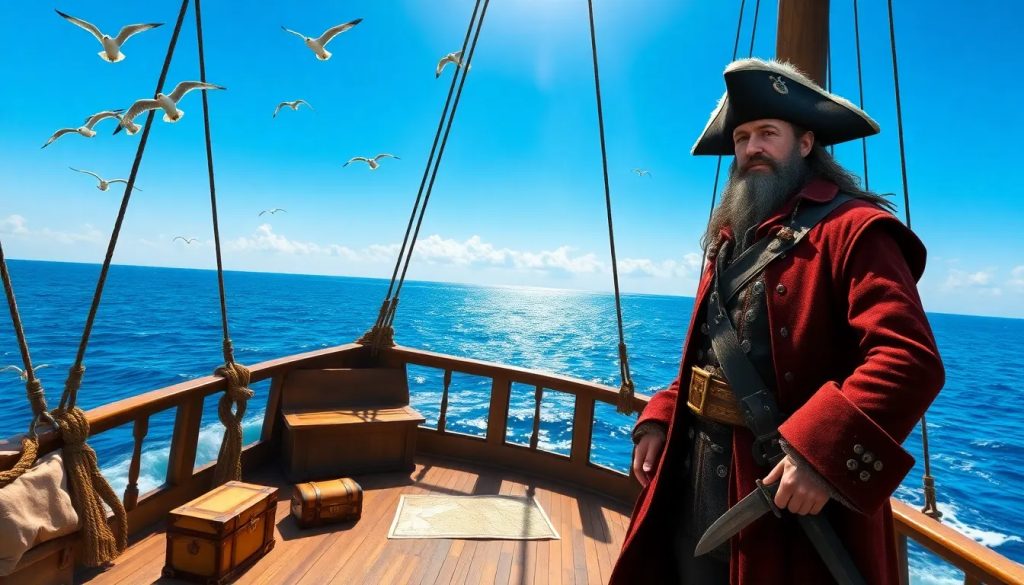
History echoes with the tales of pirates and their buried treasures, with Captain William Kidd standing out as one of the most fascinating figures of the Golden Age of Piracy. His life, shrouded in myth and mystery, continues to captivate historians and enthusiasts alike, as they delve into the adventures and misfortunes that turned a man of authority into a symbol of piracy.
Who Was William Kidd?
From his humble beginnings in Dundee, Scotland, William Kidd made a name for himself as a respected privateer before his notoriety as a pirate. Born in 1645, his maritime career was marked by the complex politics and wars of the 17th century.
Initially, he served as a privateer for the British Crown, authorized to attack enemy ships during the Anglo-French Wars. His evolution from a law-abiding seafarer to a feared pirate is a tale of ambition, betrayal, and desperation.
What Was The Early Life Of William Kidd?
Little is known about Kidd's early life, but records suggest that he was born to a seafaring family. His pre-piratical career included hunting for pirates and protecting British colonial interests, which earned him a reputation of reliability and valor.
His seamanship skills and intimate knowledge of the treacherous waters made him a valuable asset to the Crown, and it wasn't long before he was granted his first command.
How Did William Kidd Become A Pirate?
The line between privateering and piracy was often blurred. Kidd's transition to piracy was influenced by various factors, including financial pressures and the failure to capture enemy ships.
His capture of the Quedah Merchant, laden with valuable commodities, was the turning point. While it brought him great riches, it also marked him as a pirate in the eyes of the law, as the ship's cargo belonged to allies of England.
What Happened During William Kidd's Trial And Execution?
- Kidd's trial was a public spectacle, with heated debates over the legality of his actions and the moral ambiguity surrounding privateering.
- His defense hinged on the legitimacy of his actions as a privateer, but the political tide had turned against him.
- Convicted of piracy and the murder of one of his crew members, Kidd was hanged in 1701, his body displayed over the River Thames as a warning to others.
What Is The Legacy Of William Kidd?
William Kidd's legacy extends beyond his life and into the realm of legend. The very mention of his name conjures images of hidden treasures and swashbuckling adventures.
His story has been immortalized in literature and pop culture, with "Treasure Island" being one of the most notable examples. His life continues to intrigue many, as it encapsulates the perilous allure of the pirate's life.
Did William Kidd Really Have Treasure?
The question of William Kidd's treasure remains one of the greatest mysteries of maritime history. Tales of hidden loot have spurred countless treasure hunts, but the truth remains elusive.
While some artifacts have been discovered, the vast riches that legend speaks of are yet to be found, leading many to speculate about their existence.
What Ships Did William Kidd Command?
Kidd commanded several ships throughout his career, each playing a role in his transformation from privateer to pirate. The Quedah Merchant is the most infamous of his ships, its capture marking the beginning of his downfall.
Other vessels under his command included the Antigua and the Blessed William, which he utilized in his privateering efforts before his fateful turn to piracy.
Examining the life of Captain William Kidd offers a glimpse into the tumultuous world of the Golden Age of Piracy, where the line between legality and lawlessness was razor-thin. His story is a cautionary tale of a man whose name became synonymous with piracy, his life etched into the annals of maritime history.