
William Laud
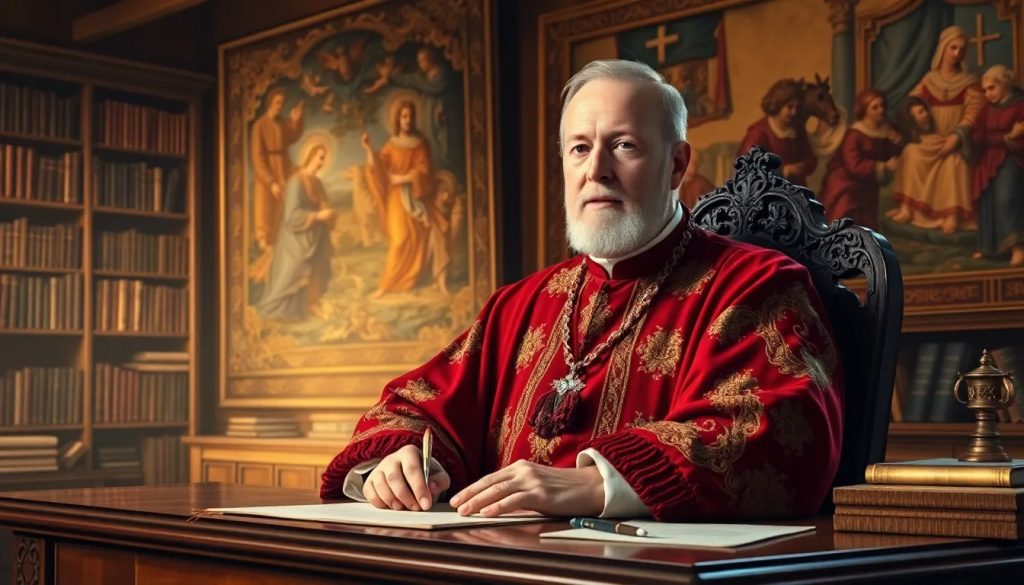
The name William Laud evokes a complex tapestry of religious fervor, political turmoil, and enduring intellectual legacy. Known for his inflammatory role in the prelude to the English Civil War, Laud's quotations are not merely echoes of the past but remain vibrant discussions of faith, governance, and personal conviction in the modern age.
At a glance
- Historical period: Early 17th century, leading up to the English Civil War
- Field or role: Archbishop of Canterbury, religious reformer
- Main themes: Religious uniformity, church authority, ceremonial worship
- Resonance: Embodiment of the struggle between authoritarian governance and individual conscience
Core Ideas in William Laud's Quotes
William Laud's quotes reflect a steadfast commitment to his vision of religious worship and governance. His words often resonate with themes of divine right and the sacredness of ritual, showcasing his unfaltering belief in the importance of a unified, hierarchical church.
Another recurring theme in Laud's quotes is the significance of tradition in the Anglican faith. He fiercely defended the Church of England's practices against Puritan calls for simplification, highlighting his conviction that the splendor of religious ceremony was essential to worship.
Moreover, Laud's quotes often touch upon the tensions between church and state, reflecting his role in escalating conflicts that would eventually fuel the English Civil War. His words offer insight into his perspective on governance and its interplay with ecclesiastical authority.
His stance on Arminianism is another crucial theme, as it represents his theological views on predestination and free will, subjects of much debate in his time.
Laud's quotes also reveal his antipathy towards Puritanism and other forms of Protestant nonconformity. His belief in a unified religious expression is evident in his harsh treatment of dissenters, whom he viewed as threats to societal order.
Famous Quotes by William Laud
William Laud's quotes epitomize his era's religious conflicts and power struggles. Each quote serves as a microcosm of the larger ideological battles of 17th-century England. The quotes below embark us on a journey through his controversial stances and the reactions they elicited.
The context of Laud's quotations often revolves around his efforts to impose religious uniformity and the resultant opposition from Puritans. His words mirror the divisive nature of his reforms, embedding his personal philosophy into the fabric of Anglican liturgy and practice.
His quotes also reflect his relationships with key historical figures, such as Charles I, and the impact of these relationships on his policies and ultimately his downfall. The significance of these quotes lies not just in their historical context but also in their thematic relevance, as they often address broader questions of faith and authority.
Applying William Laud's Wisdom
- Reflection: Consider the balance between tradition and innovation in modern religious practice.
- Journaling: Contemplate the role of individual belief systems within larger community values.
- Leadership: Explore the dynamics of power and responsibility in positions of religious authority.
- Creativity: Laud's emphasis on ceremony can inspire a richer, more sensory approach to personal rituals.
- Resilience: His steadfastness, notwithstanding the ultimate outcome, can be seen as a testament to personal conviction.
- Personal Growth: Reflect on the importance of aligning one's actions with deeply held beliefs, regardless of opposition.
For those intrigued by the theological and political dilemmas that William Laud represents, several other authors and thinkers tread similar ground. Thomas Cranmer, as an influential figure in the early Reformation, confronts similar themes of authority and religious practice. Richard Hooker's work provides a foundational perspective on Anglican theology and ecclesiology, offering a backdrop to Laud's more contentious approaches. John Donne, while best known as a metaphysical poet, grapples with the religious conflicts of the era in his sermons and devotional writings.
Each of these figures engages with the interplay of spirituality, tradition, and authority in ways that resonate with or contrast against William Laud's legacy, allowing readers to delve deeper into the rich tapestry of Anglican history and thought.
In exploring the enduring impact of these figures, one can't help but be reminded of the complexities of blending individual conviction with collective tradition—a challenge that William Laud's life and quotes encapsulate with vivid precision.