
William McKinley
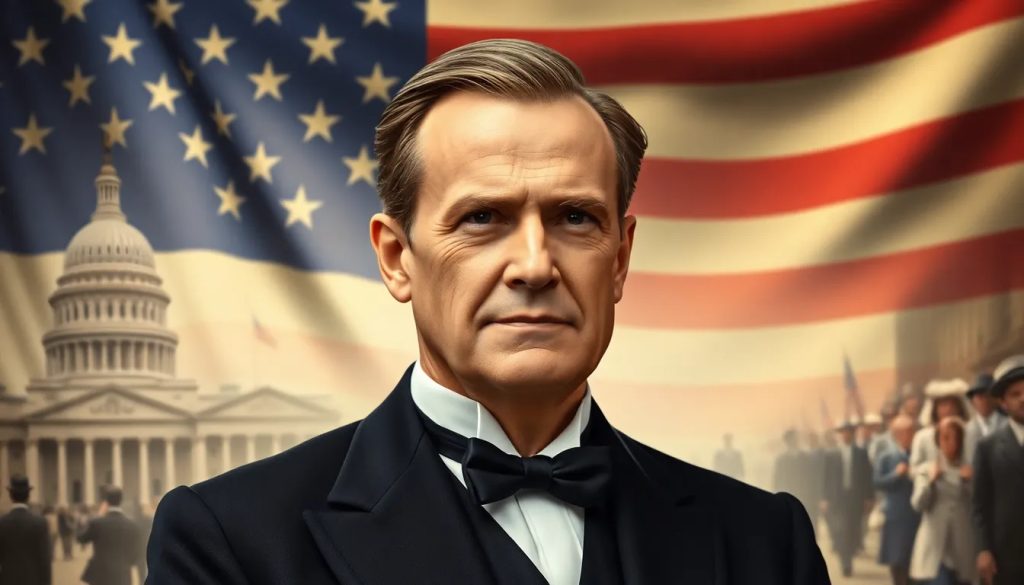
At the turn of the 20th century, one figure rose above the political horizon to steer the United States through a period of unprecedented economic growth and territorial expansion; that man was William McKinley. Though his life was cut short by an assassin's bullet, his words and actions continue to echo through history, influencing the fabric of American policy and ideology. His presidency marked a significant turning point, leading the nation onto the world stage with a robust foreign policy and a commitment to economic stability.
- At a glance
- What were William McKinley's early years?
- How did William McKinley start his political career?
- What achievements did William McKinley have as president?
- What were the circumstances surrounding William McKinley's assassination?
- How did William McKinley influence American foreign policy?
- What were the key events during William McKinley's presidency?
- What is the legacy of William McKinley in American history?
At a glance
- Historical period: Late 19th century to the early 20th century
- Field/role: 25th President of the United States
- Main themes in quotes: American prosperity, protectionism, and expansionism
- Resonance: McKinley’s words reflect the spirit of American ambition and the dawn of a new global era
What were William McKinley's early years?
William McKinley's early years were marked by humble beginnings in Niles, Ohio, where he was born in 1843. His formative years were spent in a country bracing itself for the tumult of the Civil War—a conflict that would later serve as the crucible for his leadership qualities. Following his education, McKinley enlisted in the Union Army, where he served with distinction and formed connections that would propel him into the political arena.
After the Civil War, McKinley pursued a career in law, but it was politics that captured his enduring interest. His integrity, oratory skills, and commitment to the Republican Party ideals fast-tracked his ascent in the political hierarchy. An advocate for protective tariffs and labor rights, McKinley's early platforms set the stage for his future presidency.
How did William McKinley start his political career?
McKinley’s entry into politics was as a Republican congressman from Ohio, where he quickly distinguished himself as a proponent of economic policies designed to shield American industries and workers. His efforts in Congress were focused on creating a stable environment for growth, primarily through the McKinley Tariff, which aimed to protect domestic production from foreign competition.
His political journey was not without setbacks; however, his resilience and ability to connect with the American public saw him rise to the position of Ohio governor. His tenure further cemented his reputation as a politician dedicated to economic prosperity and the welfare of his constituents.
What achievements did William McKinley have as president?
McKinley’s presidency, which began in 1897, ushered in an era of significant economic growth and stability. He was a staunch advocate of the gold standard, which helped restore and maintain public confidence in the nation’s monetary policies during a time of economic depression.
His administration brought about the Dingley Tariff, which once again focused on protecting domestic industries. Perhaps his most significant achievement was his leadership during the Spanish-American War, a conflict that resulted in the United States acquiring territories such as Puerto Rico, Guam, and the Philippines, thereby marking the country's foray into imperialism.
Beyond the war, McKinley was instrumental in the annexation of Hawaii, which further emphasized his commitment to expanding America's influence overseas. His presidency also saw advancements in domestic policy, including the promotion of trust regulation and the passage of the Gold Standard Act in 1900.
What were the circumstances surrounding William McKinley's assassination?
The end of McKinley's presidency was as dramatic as it was tragic. On September 6, 1901, while attending the Pan-American Exposition in Buffalo, New York, McKinley was shot by an anarchist, Leon Czolgosz. The president succumbed to his wounds eight days later, leaving a nation in mourning and propelling Vice President Theodore Roosevelt into the presidency.
An advocate for peace and negotiation, McKinley's assassination highlighted the volatile nature of a rapidly changing world. His death not only marked the loss of a president but also the end of an era, as Roosevelt's subsequent presidency would take America down new and uncharted paths.
How did William McKinley influence American foreign policy?
McKinley's tenure was a crucial period in the shaping of American foreign policy. His approach was marked by a sense of measured expansionism. He believed that the United States should extend its influence primarily through diplomacy and economic power, rather than military force. However, the circumstances of the Spanish-American War pushed his administration into a more active role on the global stage.
Under McKinley, the United States emerged as a colonial power, with the acquisition of overseas territories that were seen as strategic stepping stones in projecting American power. The Open Door Policy in China, which advocated for equal trading rights among colonial powers, further demonstrated his administration's intent to engage more deeply in international affairs.
What were the key events during William McKinley's presidency?
- 1896 and 1900 Elections: McKinley's decisive victories
- Spanish-American War: A pivotal conflict leading to U.S. territorial gains
- Annexation of Hawaii: Expansion of American influence in the Pacific
- Gold Standard Act: Stabilization of the U.S. economy
- Assassination: A premature end to a presidency of impact
What is the legacy of William McKinley in American history?
McKinley's legacy is one of complexity and enduring influence. His presidency coincided with a pivotal moment in American history, where the nation transformed into a global power. His decisions in office—the emphasis on economic stability, the expansion of American borders, and the assertion of U.S. influence abroad—have had lasting effects that shaped the trajectory of the 20th century.
While some aspects of his imperialist policies have been subject to criticism, the prosperity and growth experienced under his leadership cannot be denied. As a result, McKinley remains a significant, if at times controversial, figure in the annals of American presidents.
McKinley's vision helped to mold the modern United States, and his presidency set precedents in both foreign and domestic policy that would guide his successors. In the end, his stature in history is defined not only by the achievements of his administration but also by the challenges he faced and the America he envisioned.