
William Paley
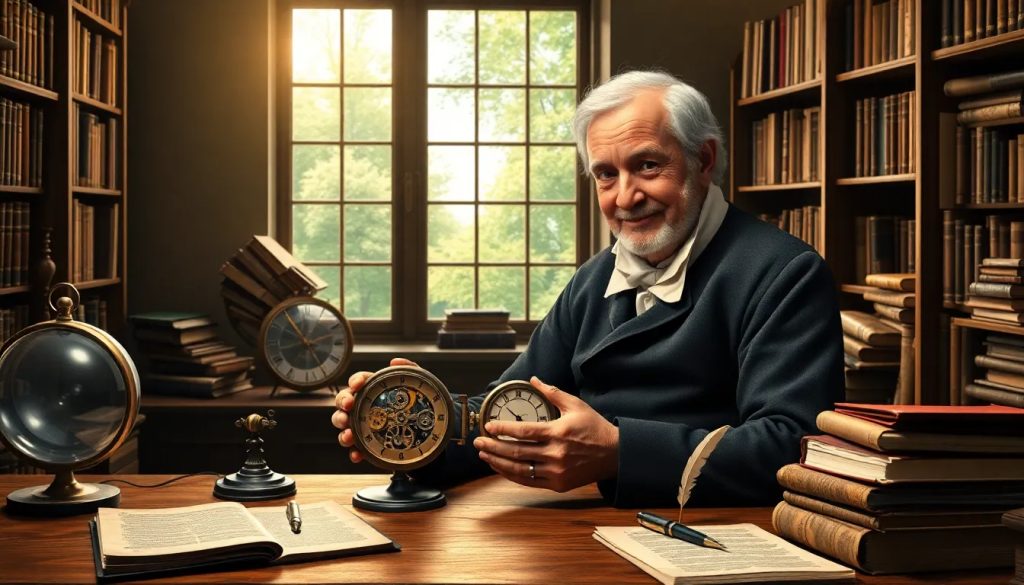
The enduring legacy of William Paley is not merely in the historical record of theology and philosophy but in the way his insightful quotations continue to inspire and provoke thought. His well-articulated ideas, particularly the famous watchmaker analogy, remain subjects of discussion, reflection, and debate amongst scholars and laypeople alike, proving that the power of well-chosen words can indeed resonate through the ages.
Despite the challenges from scientific developments and evolving schools of thought, the quotes of Paley still hold a place in the discourse of theology, ethics, and evidential arguments for the existence of a divine creator. His eloquence and clarity in arguing for the presence of intelligent design in the natural world have assured him a lasting presence in academic and religious discussions.
- At a glance
- The core themes in Paley's quotes
- William Paley's key philosophical works
- William Paley's Watchmaker Analogy
- William Paley and the Argument from Design
- William Paley's contribution to Theology
- How Darwin challenged William Paley's ideas
- Practical ways to use Paley's quotes
- Authors resonating with Paley's themes
- Notable quotes by William Paley
At a glance
- Historical period: Late 18th - early 19th century
- Field/Role: Anglican theologian and philosopher
- Main themes: Argument from design, natural theology, moral and ethical reasoning
- Resonance: Paley's words offer a window into the theological and philosophical underpinnings of his era, grappling with the evidence of divine creation in a world on the brink of scientific revolution.
The core themes in Paley's quotes
William Paley's philosophical works are replete with themes that reflect his deep engagement with the natural world and his theological beliefs. One enduring theme is the intricacy of nature as evidence of divine design, a concept that underpins his most famous work, "Natural Theology." He also frequently explores the theme of ethical and moral conduct, as seen in works like "The Principles of Moral and Political Philosophy." Additionally, Paley delves into the rationale for belief in a divine being, often using logic and analogy to make his case. His discourse on these topics remains influential, representing a bridge between theological tradition and emerging scientific thought of his time.
William Paley's key philosophical works
"A View of the Evidence of Christianity" and "Natural Theology" are among William Paley's key philosophical works. Both texts delve into the foundation of his argument from design and have been instrumental in shaping discussions within theology and philosophy. "Natural Theology," in particular, is where Paley articulates his watchmaker analogy, illustrating his belief in a universe so complex and well-ordered that it must be the product of intelligent design.
William Paley's Watchmaker Analogy
The watchmaker analogy is a cornerstone of William Paley's argument from design. He posits that just as a watch, with its intricate complexity and purposeful design, implies a watchmaker, so too does the natural world imply the existence of an intelligent creator. This compelling analogy sought to make the abstract concept of divine design tangible and relatable, using everyday observations to argue for the existence of God.
William Paley and the Argument from Design
Paley's influence on the argument from design is significant. He elaborated on earlier analogies of natural complexity, asserting that the harmonious functioning of the universe is indicative of a designer's hand. His work provided a structured and accessible framework for this line of reasoning, which has been a touchstone for those who support the idea of a divine creator.
William Paley's contribution to Theology
William Paley's contributions to theology extend beyond his argument for intelligent design. In his moral and political philosophy, he also tackled issues of ethics, duty, and the welfare principle. His theological work provided a robust platform for understanding the relationship between human morality and divine will, influencing theological discourse and education.
How Darwin challenged William Paley's ideas
Charles Darwin's theory of natural selection offered a powerful counterpoint to Paley's design arguments. By explaining biological complexity through the lens of evolution and adaptation, Darwin presented a scientific explanation that did not necessitate a divine creator. This challenge to Paley's ideas was fundamental, setting the stage for ongoing debates between science and religion.
Practical ways to use Paley's quotes
- Reflection on the complexity of the natural world and our place within it
- Journaling prompts to explore personal beliefs about creation and design
- Leadership discussions on ethics and moral reasoning in decision-making
- Creative inspiration for artists and writers exploring themes of life and purpose
- Personal growth exercises contemplating the balance of faith and reason
Readers drawn to William Paley's work may also find resonance with authors like Cicero, who explored natural law and divine reason, and Thomas Aquinas, whose synthesis of faith and reason echoes Paley's reconciliatory efforts. In modern times, authors such as C.S. Lewis, who articulate the relationship between faith, reason, and morality, may appeal to those interested in Paley's legacy.
Notable quotes by William Paley
In the quotes below, we witness the breadth of Paley's intellect and his ability to communicate profound theological and philosophical concepts. His assertions on the evidence of a divine creator in the natural world, the moral obligations of human beings, and the nature of belief itself are as stirring today as they were in his own time. These quotations encapsulate a worldview rooted in the search for understanding through nature, reason, and faith.
Explore more on related themes: faith, reason, ethics, and the natural world.