
William Penn
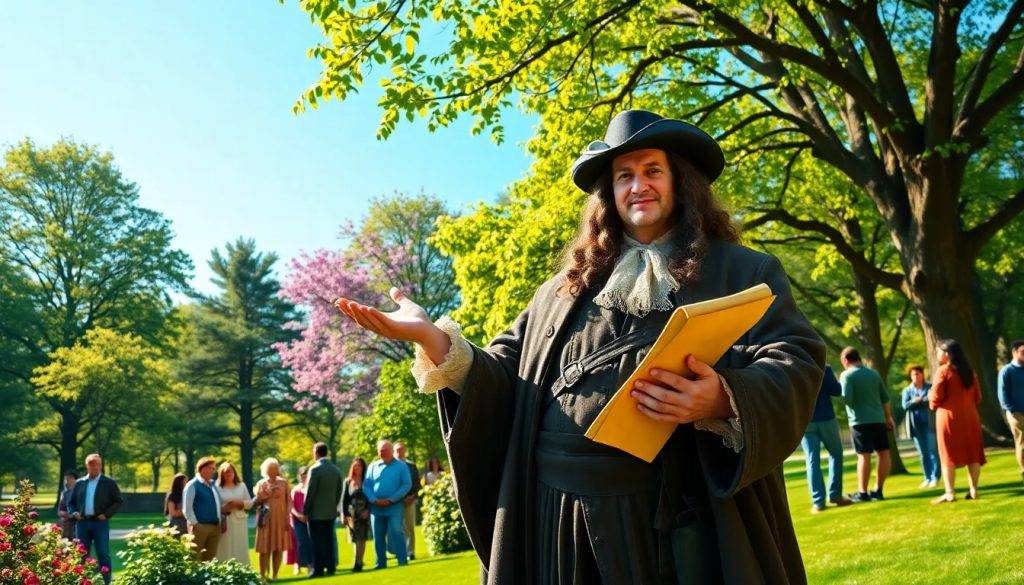
Reflecting on the past often leads us to the wisdom of influential figures whose words continue to resonate through the ages. Among these historical voices, William Penn stands out as a beacon of liberty and peace. His enduring quotes capture the essence of a visionary who not only shaped an era but also left an indelible mark on the world with his ideals of religious freedom and societal harmony.
At a Glance
- Historical period: 17th century
- Field: Religious leader, founder of Pennsylvania, Quaker advocate
- Main themes: Religious freedom, peace, civil governance
- Resonance: Penn's words inspire due to their advocacy for liberty and human rights
Core Ideas in William Penn's Quotations
The quotations of William Penn reveal a thinker whose ideas were far ahead of his time. His emphasis on religious tolerance was revolutionary in an era marked by sectarian conflict. The recurring theme of liberty within his words showcases his desire for a society where people are free to worship and live without fear of persecution.
Another notable theme is civil governance, with Penn advocating for a government that serves the people and upholds justice. His vision of peace and ethical interaction with Native Americans highlighted the importance of mutual respect and equity in all relations. Penn's belief in the inner light of every individual shaped his Quaker values and his approach toward education and personal development.
Furthermore, the simplicity and humility advocated by Penn echo through his quotes, underscoring the essence of a life not cluttered by excess but enriched by virtue. In his writings, one can also detect a deep sense of community and the belief that collective harmony stems from individual responsibility and piety.
William Penn's Enduring Words
William Penn's most representative quotes reflect his profound commitment to principles that are just as relevant today as they were in his time. His statements on justice, for example, remind us that fairness is at the heart of a well-ordered society. In the realm of faith and conscience, Penn's words offer solace and a call to inner reflection, advocating for the right of individuals to follow their spiritual path without hindrance.
On governance, his insights into the nature of power and its potential for abuse emphasize the need for checks and balances in civil society. The quotes below also speak to Penn's deep respect for the natural world and his belief in living harmoniously within it.
These expressions, filled with wisdom, continue to guide those seeking direction in matters of personal ethics, community engagement, and the ceaseless pursuit of peace. As we discuss the quotes below, let's delve into the thematic context that makes each one a beacon of enduring wisdom.
Practical Applications of William Penn's Quotes
- Reflection: Consider his quotes during quiet contemplation to inspire personal integrity.
- Journaling: Use his words as prompts to explore one's own beliefs and aspirations.
- Leadership: Apply his insights on governance and civic duty in leadership roles.
- Creativity: Let his views on natural harmony and simplicity fuel creative expression.
- Resilience: Draw strength from his commitment to principles in the face of adversity.
- Personal Growth: Embrace his holistic approach to growth in educational settings and beyond.
Contemporaries and Successors
Other historical figures share the spotlight with William Penn in advocating for religious freedom and ethical governance. For example, John Locke, with his treatises on government and tolerance, echoes Penn's philosophy, emphasizing the importance of individual rights and the separation of church and state.
George Fox, as the founder of Quakerism, shares the non-conformist spirit and the inner light doctrine that deeply influenced Penn. And in the realm of peace-making, the work of Benjamin Franklin in diplomacy and social reform aligns with the peaceful and innovative spirit of Penn's legacy.
Each of these authors offers a unique perspective, yet together they form a mosaic of voices that call for a just, tolerant, and enlightened society.
Explore more on related themes: religious tolerance, civil rights, ethical leadership.