
William Standish Knowles
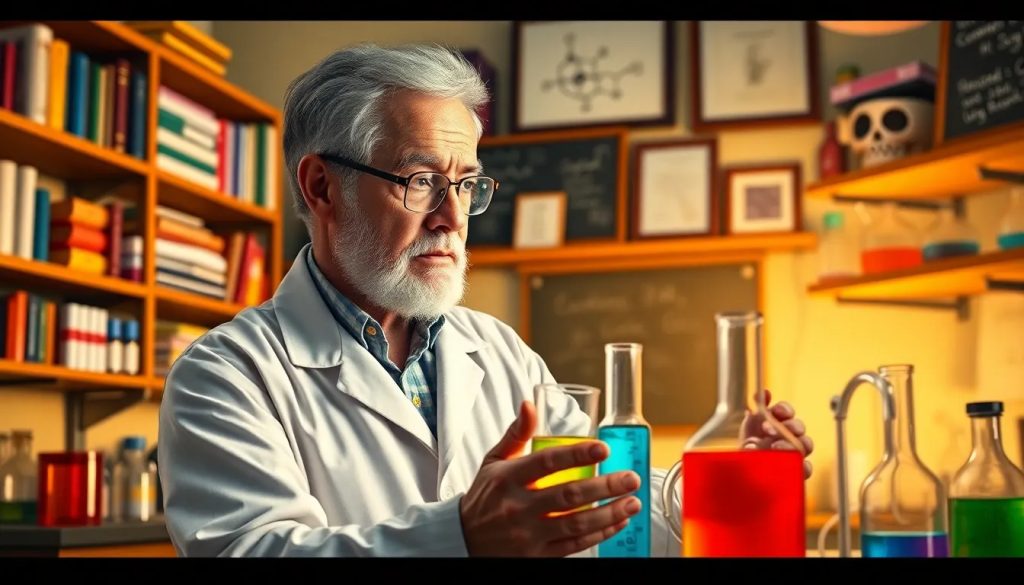
William Standish Knowles remains a beacon in the scientific community, revered for the ingenuity and precision he brought to the field of chemistry. His name, often interwoven with discussions on asymmetric catalysis and pharmaceutical advancements, resonates with those who delve into the study of molecular science or the history of medicine. Knowles' contributions to the synthesis of chiral molecules not only changed the landscape of chemical manufacturing but also provided a tangible impact on the lives of many through improved drug therapies.
At a glance
- Historical period: 20th Century
- Field: Chemistry/Pharmaceutical Science
- Main themes: Asymmetric catalysis, Chiral compounds
- Resonance: Revolutionary treatments and industrial chemistry processes
Legacy of William Standish Knowles
The legacy of William Standish Knowles is etched into the history of chemistry through his significant contributions to asymmetric catalysis. Knowles' work paved the way for scientists to more efficiently produce molecules with specific orientations, a fundamental aspect of many pharmaceuticals.
His influence extended beyond academia into the industrial sphere, where his research at Monsanto transformed the processes of chemical manufacturing. This has had a lasting effect on the way drugs are produced, making medications more accessible and effective.
Notably, Knowles' research on the synthesis of L-DOPA showcased the real-world impact of chiral catalysts, demonstrating their utility in pharmaceutical synthesis.
William Standish Knowles and Asymmetric Catalysis
Knowles' pivotal role in asymmetric catalysis is one for the history books. Asymmetric catalysis refers to the method of creating chiral molecules, compounds that are mirror images of one another and cannot be superimposed. This distinction is crucial in the development of many drugs, as the different orientations can have vastly different effects on the human body.
Knowles' research into chiral catalysts allowed for the selective production of desired molecules with unprecedented precision. This breakthrough had a profound impact on how drugs were developed, ensuring the correct molecular orientation for maximum efficacy and safety.
The success of these synthetic methods is best exemplified by the development of L-DOPA, an essential drug used in the treatment of Parkinson's disease, highlighting the societal relevance of Knowles' scientific endeavors.
Key Achievements of William Standish Knowles
William Standish Knowles' achievements are manifold, but none so prominent as his Nobel Prize in Chemistry, awarded in 2001. This prestigious recognition cemented his status as a pioneer in his field.
Among his accomplishments, the development of processes for asymmetric hydrogenation stands out. This innovative approach allowed for the practical and scalable production of chiral compounds, which was game-changing for the pharmaceutical industry.
His accolades also include being a member of the National Academy of Sciences, a testament to his esteemed position within the scientific community.
Educational Background of William Standish Knowles
The intellectual journey of William Standish Knowles began with his education at some of the most prestigious institutions. After attending Harvard University for his undergraduate studies, he pursued his Ph.D. at Columbia University.
It was during his time at these institutions that Knowles honed his analytical and research skills, setting the foundation for his future discoveries in chemistry. His educational background provided him with the tools and knowledge to make groundbreaking strides in his career.
Impact on Pharmaceutical Synthesis
The impact of William Standish Knowles on pharmaceutical synthesis cannot be overstated. His advancements in the selective production of chiral molecules addressed a critical challenge in drug development: ensuring the correct molecular orientation for therapeutic effectiveness.
His methods not only increased the efficiency and precision of pharmaceutical manufacturing but also reduced costs, making life-saving drugs more widely available. The far-reaching implications of his work continue to benefit the field of medicine today.
Awards and Honors
Throughout his illustrious career, William Standish Knowles received many awards and honors. The crowning achievement was undoubtedly the Nobel Prize in Chemistry, but his recognition did not end there.
He was the recipient of numerous accolades, including the Priestley Medal and the Perkin Medal. These awards reflect the high esteem in which his peers held Knowles and his work, acknowledging his enduring contributions to science and humanity.
Reflecting on the life and work of William Standish Knowles reveals a portrait of a scientist whose curiosity, dedication, and ingenuity left an indelible mark on the world. His research not only transformed the field of chemistry and advanced the production of pharmaceuticals but also showcased the profound potential of human intellect and creativity. As we continue to reap the benefits of his contributions, Knowles' legacy serves as a testament to the enduring power of scientific discovery and its capacity to improve the human condition.