
Wong Kar wai
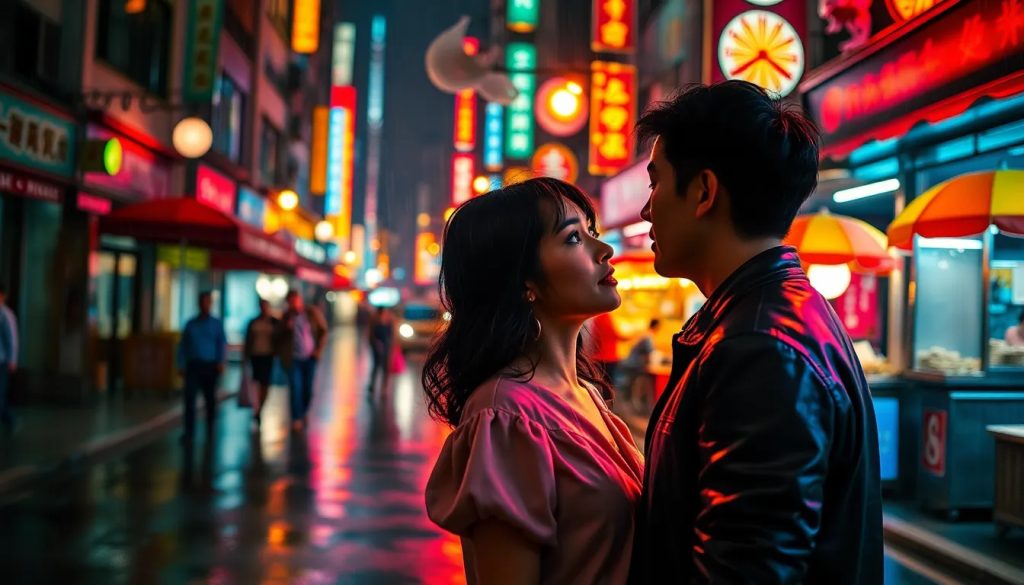
Wong Kar Wai: A Cinematic Visionary
The world of cinema is adorned with the works of Wong Kar Wai, an auteur whose films extend beyond the screen to touch the hearts and minds of audiences. Recognized for their poetic storytelling and visual innovation, Wong's movies are not merely watched; they are experienced. As we delve into his cinematic universe, we uncover the layers that make his work resonate deeply with so many.
Exploring the Life and Career of Wong Kar Wai
At a Glance
- Historical period: Modern cinema, particularly 1990s to present
- Field: Filmmaker/Director
- Main themes: Romance, memory, alienation, time
- Resonance: Captures the intricacies of human emotion with visual and narrative elegance
Foundations of Style and Substance
Wong Kar Wai's journey in film began with graphic design, an influence that is evident in his meticulous attention to visuals. His directorial debut, "As Tears Go By," hinted at the emerging style that would become his signature. It was "Chungking Express" that catapulted Wong to international acclaim, showcasing his ability to weave multiple storylines into a rich tapestry of urban life.
The director's unique narrative flow, often non-linear and laced with emotion, has become a hallmark of his work. His movies are characterized by a sense of longing and introspection, exploring the themes of love, loss, and the unrelenting march of time.
While many directors focus on plot-driven stories, Wong prioritizes the mood and atmosphere. His films are like visual poems, where every shot is crafted to evoke a feeling, to tell a story beyond words. This focus on feeling rather than explaining is what draws viewers into the Wong Kar Wai cinematic universe.
What Are the Most Notable Wong Kar Wai Movies?
A Curated Filmography
Wong's filmography is not extensive, but each work is a testament to his dedication to cinema. "In the Mood for Love" remains a pinnacle of his career, a masterpiece of unrequited love and restrained passion. "2046" follows as a complex sequel, intertwining narratives of past and future loves. And who could forget the vibrant "Fallen Angels," an exploration of the night and those who inhabit it?
Equally noteworthy are "Happy Together" and "The Grandmaster," each distinct in their storytelling but unmistakably Wong's in their thematic concerns and visual presentation. His ability to craft complex characters and place them in exquisitely framed scenes is unmatched.
How Did Wong Kar Wai Influence Contemporary Cinema?
An Auteur's Impact
Wong Kar Wai's influence on contemporary cinema can be seen in the works of directors who value visual storytelling and emotional depth. His narrative techniques, often involving fragmented timelines and poetic dialogue, have encouraged filmmakers to experiment with form and structure.
Wong's use of music, color, and lighting to convey emotion has also been widely admired and imitated. His impact is not confined to art-house circles but can be felt in mainstream movies that seek to provide a more sensory and emotive experience.
The director's style has contributed to a broader conversation about cinema's capabilities, pushing the boundaries of how stories are told and experienced on screen.
What Is the Aesthetic of Wong Kar Wai's Films?
Visual Poetry in Motion
The aesthetic of Wong Kar Wai's films is one of the most distinctive in modern cinema. Cinematographer Christopher Doyle has been a key collaborator, helping to create lush, saturated visuals that are instantly recognizable. Slow-motion sequences, tight close-ups, and a palette that favors deep, rich colors are all trademarks of Wong's cinematic language.
Wong's films often feature characters framed against backgrounds that are both beautiful and melancholic, a visual metaphor for their internal states. The interplay of light and shadow, the dance of the camera as it follows characters through narrow alleys and vast landscapes, all contribute to an atmosphere that is both intimate and expansive.
Who Are the Key Collaborators in Wong Kar Wai's Works?
Partners in Artistry
Wong Kar Wai's works are the result of close collaborations with a recurring group of artists. Tony Leung, Wong's muse, has delivered some of the most compelling performances in his films, embodying complex characters with subtlety and depth.
Maggie Cheung's portrayals of elegant yet emotionally rich characters have become iconic, her presence almost synonymous with Wong's oeuvre. Cinematographer Christopher Doyle's contribution to the visual identity of Wong's films cannot be overstated, and neither can the role of William Chang, the production designer, editor, and costume designer, whose work has been integral to the aesthetic coherence of the films.
What Themes Are Common in Wong Kar Wai's Storytelling?
Exploring the Human Heart
In Wong Kar Wai's storytelling, themes of romantic themes, memory, and the passage of time are omnipresent. His characters often grapple with feelings of longing and desire, set against the backdrop of a world in flux. Wong's films explore the tension between traditional values and modernity, particularly in the context of Hong Kong's unique cultural landscape.
Alienation and connection are also recurring motifs, as his characters navigate the complexities of relationships in the urban maze. Wong's narrative style, which often circles back on itself, reflects the cyclic nature of these themes, echoing the idea that we are all bound by the same human experiences, no matter the time or place.
Is There a New Wong Kar Wai Movie Coming Soon?
Anticipating the Next Chapter
Fans of Wong Kar Wai are always eager for news of his upcoming projects. While the director maintains a certain level of mystery around his work, any announcement of a new film is met with great anticipation. As of now, audiences await any news on future projects, ready to be immersed once again in the profound worlds he creates.
Wong Kar Wai's work is a testament to the power of cinema as a form of art. His films remind us that beyond entertainment, movies can be a mirror to our own lives, revealing the complexities of the human condition. As he continues to inspire filmmakers and audiences alike, his legacy in the world of cinema remains undeniable.