
Woodrow Wilson
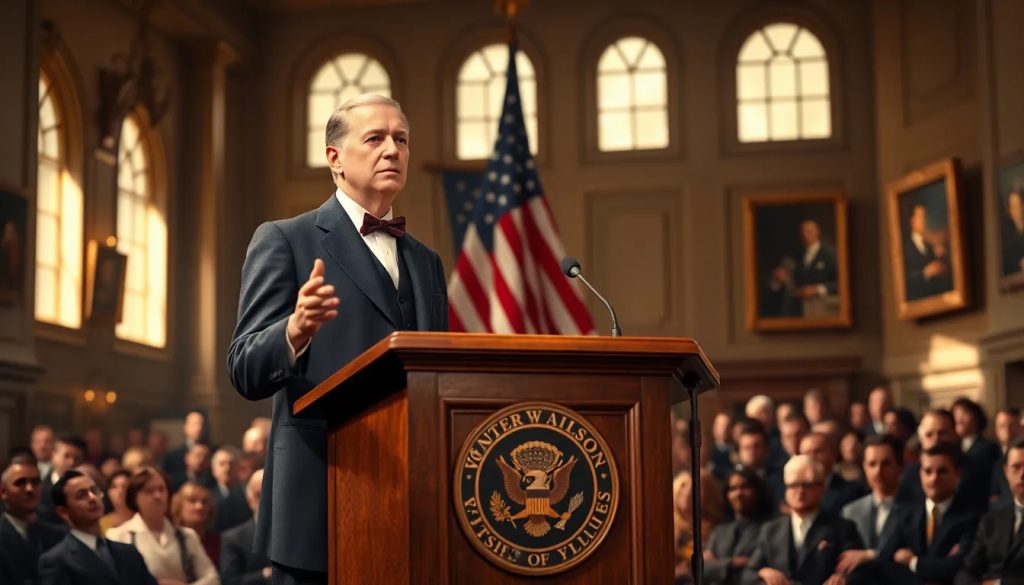
Known for his visionary leadership and profound statements, Woodrow Wilson left an indelible mark on international politics and U.S. history. His enduring quotes continue to inspire and provoke thought long after his tenure as the 28th President of the United States. In this exploration of Wilson's legacy, we delve into the themes and ideas that made his words timeless.
During his presidency, Wilson navigated through the complexities of World War I and laid the groundwork for modern international diplomacy. Despite facing significant health challenges, his intellectual prowess and political reforms have kept his contributions to American society and the world relevant to this day.
At a glance
- Historical period: Early 20th century, specifically 1913-1921
- Field or role: 28th President of the United States
- Main themes: International peace, democracy, and progressive reform
- Resonance: Wilson's words reflect a deep commitment to justice and a visionary approach to global governance
Core ideas in Woodrow Wilson's quotations
Wilson's quotations often reflect his belief in self-determination and democratic ideals. He was a staunch advocate for the rights of individuals and nations alike to chart their own courses. His vision of a world safe for democracy is encapsulated in his speeches and writings, which frequently discuss the importance of moral leadership and ethical governance.
The theme of peace and reconciliation is another cornerstone of Wilson's rhetoric, especially in the context of World War I. His Fourteen Points for Peace outline his holistic approach to healing a world torn apart by conflict, emphasizing transparency and cooperation among nations.
Wilson was also a key figure in the Progressive Movement, and his quotes often touch on the need for systemic reforms to ensure fairness and equality in society. His commitment to this cause is evident in his efforts to establish the Federal Reserve and introduce antitrust legislation.
Lastly, the concept of international collaboration is central to Wilson's philosophy. His push for the creation of the League of Nations highlights his belief in the power of collective security and shared responsibility for global affairs.
Woodrow Wilson's most representative quotes
Wilson's quotations are a testament to his vision of a more democratic and peaceful world. The quotes below resonate with the themes of unity, courage, and the relentless pursuit of justice, embodying his aspirations for humanity. His words often serve as a moral compass, guiding leaders and citizens alike toward a more equitable future.
For example, Wilson's statement "We must be impartial in thought as well as in action", emphasizes the importance of objectivity and fairness in governance, a principle that remains relevant in today’s political discourse.
Another profound declaration, "Peace is a process of accommodation and is not an abatement of arms", captures his deep understanding of peace as an ongoing effort rather than merely the absence of war.
Practical ways to use Woodrow Wilson's quotes
- Reflection on civic responsibility and the role of citizens in a democracy
- Journaling prompts to encourage critical thinking about international relations
- Leadership development with a focus on ethical decision-making and moral courage
- Stimulating creativity and problem-solving in the context of global challenges
- Building resilience and fostering personal growth through historical perspective
Theodore Roosevelt: Like Wilson, Roosevelt was a key figure in the Progressive Movement, advocating for reforms and emphasizing the stewardship of democracy.
Franklin D. Roosevelt: Roosevelt’s leadership during another global conflict, World War II, and his New Deal policies echo Wilson's commitment to progressive governance and international cooperation.
George Washington: As a founding father, Washington set precedents for democratic leadership that Wilson sought to expand upon in the context of a modern world.
Woodrow Wilson's presidency, especially during WWI, saw him facing a world aflame with conflict and in need of a new order. His significant role in shaping the post-war world, his health struggles in office, and his enduring political reforms provide a rich tapestry for understanding his multifaceted contributions to U.S. and world history.
Woodrow Wilson's 14 Points for Peace and the subsequent efforts for the Treaty of Versailles represent his most ambitious attempt to forge a lasting peace. Although encountering resistance domestically, these efforts underscore the global impact of Wilson's thought and policies.
Wilson's political affiliation with the Democratic Party, his advanced educational background including leadership at Princeton, and the influence of his religious beliefs all contributed to his complex persona. These facets of his life helped to shape the principles that underpin his famous quotations. Wilson’s legacy, while contentious in some respects, remains an essential part of the narrative of American leadership and international diplomacy.
In examining Woodrow Wilson's life and presidency, it is clear that his words were not mere rhetoric but reflected his genuine efforts to build a world that aligned with his ideals. His influence on U.S. history and his forward-thinking approach to international relations continue to be felt and debated by scholars and political leaders alike.