
Yoweri Museveni
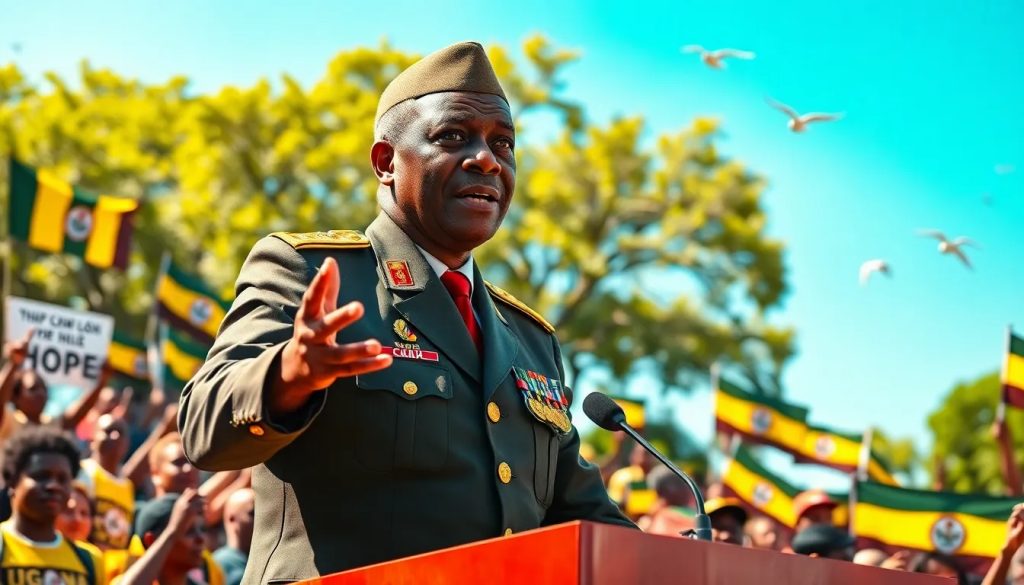
With a tenure spanning over three decades, Yoweri Museveni has become a defining figure in Uganda's sociopolitical fabric. His presidency has been marked by both advancements and controversies, establishing him as a polarizing leader whose influence reverberates well beyond the nation's borders.
- What impact has Yoweri Museveni had on Uganda's political landscape?
- How has Yoweri Museveni's leadership influenced Uganda's economy?
- What are the key events in Yoweri Museveni's political timeline?
- Who are Yoweri Museveni's children and their roles?
- What is Yoweri Museveni's religion and beliefs?
- How has Yoweri Museveni's age affected his presidency?
- What is the current status of Yoweri Museveni's net worth?
What impact has Yoweri Museveni had on Uganda's political landscape?
Museveni's ascent to power in 1986 was seen by many as a fresh start for Uganda after years of turmoil. His leadership approach combined militaristic discipline with political pragmatism, leading to a period of relative stability and economic growth. Museveni's presidency in Uganda has been characterized by his efforts to maintain a grasp on power, including constitutional amendments that have removed presidential term limits and the age cap for candidates.
However, his tenure has not been without challenges. Allegations of corruption, suppression of political opposition, and human rights violations have tainted his legacy. The political landscape under Museveni has been a complex tapestry of progress, marred by undemocratic practices and dissent suppression.
Despite these controversies, Museveni has been re-elected multiple times, reflecting a deep-seated support among certain demographics, particularly rural populations who have seen tangible improvements in their living conditions.
How has Yoweri Museveni's leadership influenced Uganda's economy?
Under Museveni, Uganda has experienced substantial economic changes. The implementation of market-driven policies has fostered growth, with a focus on infrastructure development and foreign investment. Museveni's government has also been credited with significant strides in the agricultural sector, which employs a large portion of the population.
The economic policies during Museveni's presidency have been successful in reducing the rate of poverty; however, inequality remains a pressing issue. Moreover, the economic growth has been scrutinized for its sustainability, given the reliance on foreign aid and investment.
What are the key events in Yoweri Museveni's political timeline?
Museveni's political timeline is a testament to his strategic acumen and tenacity. From his early involvement with FRONASA to combat Idi Amin's regime, to the formation of the National Resistance Army, Museveni's rise to power is a story of persistence and resilience.
- The capture of power in 1986 after a protracted guerrilla war.
- The implementation of a 'no-party' democracy system, which lasted until 2005.
- Amendments to the constitution allowing for extended presidential terms.
- Negotiation of peace with the Lord's Resistance Army, albeit with ongoing tensions.
Who are Yoweri Museveni's children and their roles?
Museveni's family has been a subject of interest, with his children assuming various roles within the political and military spheres. Muhoozi Kainerugaba, his son, has risen through the ranks of the military, sparking speculation about a potential political future.
Other children have also been involved in public service, reflecting a family deeply intertwined with the nation's governance. However, the involvement of Museveni's family in politics has led to accusations of nepotism and dynastic ambitions.
What is Yoweri Museveni's religion and beliefs?
Religion plays a significant role in Museveni's personal and political life. He identifies as a born-again Christian and has often attributed his leadership success to his faith. His religious beliefs influence his politics, particularly in social policies.
However, Museveni's administration has faced international criticism over harsh anti-LGBTQ laws, which align with the conservative Christian values held by a segment of Uganda's population.
How has Yoweri Museveni's age affected his presidency?
At over 75 years old, Museveni's age has been a focal point in discussions about his presidency. Amendments to the constitution to remove age limits for presidential candidates have allowed him to continue his rule, raising concerns about leadership renewal and the vitality of Uganda's democratic institutions.
His age has also influenced public perception, with younger generations often seeking fresher perspectives and governance approaches that differ from the status quo established over Museveni's long tenure.
What is the current status of Yoweri Museveni's net worth?
Discussions about Museveni's net worth often surface in political debates, with various reports suggesting significant wealth. However, accurate figures are elusive, given the private nature of his finances and the lack of transparency in political earnings in Uganda. The perception of his wealth has implications for public trust and the image of his administration amid accusations of corruption.
In conclusion, Yoweri Museveni's presidency has profoundly impacted every facet of Uganda's socio-political and economic landscape. His role as a stabilizing force has been both lauded and criticized, embodying the complex interplay between longevity in leadership and the pursuit of democratic principles. As his presidency continues, so does the scrutiny of his administration's policies, actions, and Museveni's own place in history.