
Yuri Andropov
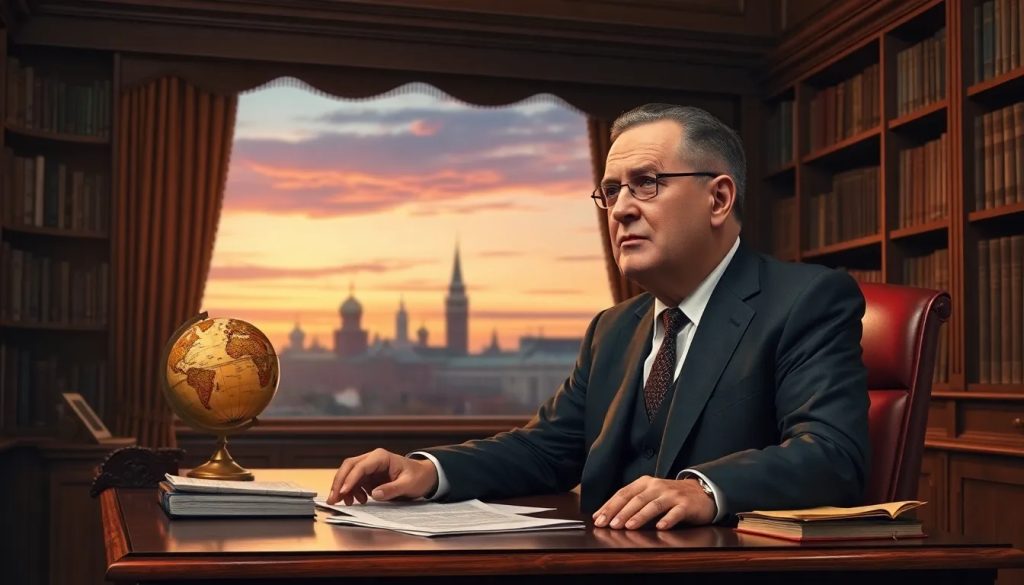
The rise of Yuri Andropov to the pinnacle of Soviet politics was as intriguing as the quotations he left behind. Known for his intellectual depth and political acumen, Andropov's words are still read and reflected upon for their insight into the complexities of governance during a pivotal period of the Cold War. His thinking, captured in candid speeches and internal communications, offers a window into the mindset of a leader navigating the treacherous waters of international relations and domestic challenges.
Andropov's tenure was brief but eventful, and his quotes often reveal a leader caught between the rigidity of Soviet orthodoxy and the need for reform. This dichotomy makes his words particularly compelling for historians, political scientists, and anyone interested in the enigmatic nature of power.
At a glance
- Historical period: Cold War era
- Field: Politics, specifically Soviet leadership
- Main themes: Governance, international relations, reform, and conservatism
- Resonance: Insight into Soviet leadership during a tense period of the Cold War
Core ideas in Andropov's quotes
Andropov's quotations frequently touch upon themes of economic revitalization, the need for intellectual rigor in governance, and the complexities of international diplomacy. His experience as the head of the KGB and his role in Soviet policies also reflect a leader deeply concerned with the stability and security of his nation, even as he faced the challenges of an evolving global landscape.
One recurring theme in Andropov's quotes is the importance of maintaining ideological purity while recognizing the necessity for some degree of reform. He was not a vocal proponent of wide-scale reform like his successor Mikhail Gorbachev, but he did understand the need for change to sustain the Soviet state.
Another key theme is the significance of international relations, particularly during the Cold War. Andropov's quotes often reveal a man aware of the delicate balance between strength and diplomacy, especially in interactions with Western leaders and amidst incidents like the Korean Airliner shootdown.
Finally, Andropov's quotes sometimes hint at an understanding of the need for economic reform. While he was constrained by the existing political system, his words occasionally suggest a leader who knew that the Soviet economy required innovation and efficiency to survive.
Representative quotes and their context
Andropov's most well-known quotations are a reflection of his tenure as a leader faced with immense domestic and international challenges. In the quotes below, we see a man who was at once a product of the Soviet system and yet someone who had a vision for a different future for his country.
His comments on the state of the Soviet economy and the necessity for efficiency and innovation hint at an awareness of the systemic issues plaguing the Union. However, Andropov was careful not to advocate for reforms that could undermine the Communist Party's grip on power.
Regarding international affairs, Andropov is often quoted on the need for the Soviet Union to assert its power and interests on the global stage, while also engaging in diplomacy. His approach to the United States and the Reagan administration, in particular, was marked by a mix of confrontation and cautious engagement.
In terms of internal affairs, Andropov's quotes reflect his KGB background, often emphasizing the need for order and the dangers of dissent, as seen in his dealings with figures like Andrei Sakharov and Aleksandr Solzhenitsyn.
Practical applications of Andropov's quotes
- Reflection on the nature of power and the responsibilities of leadership
- Journaling on the balance between reform and tradition in governance
- Leadership development, particularly in understanding geopolitical strategy
- Fostering creativity in addressing economic challenges
- Building resilience in the face of political and social upheaval
- Personal growth through the study of historical leadership and decision-making
Leonid Brezhnev: As Andropov's predecessor, Brezhnev's era set the stage for the challenges Andropov would face, and their quotations often explore similar themes of leadership during the Cold War.
Mikhail Gorbachev: Gorbachev took the ideas of reform that Andropov cautiously approached and pushed them further, leading to a significant reformation of the Soviet Union.
Reagan: As a contemporary Western leader, Reagan's quotes on the Cold War and diplomacy serve as a counterpoint to Andropov's perspectives on East-West relations.
In examining the life and words of Yuri Andropov, one gains a unique perspective on a leader who was, in many ways, a bridge between the old guard of the Soviet Union and the winds of change that were beginning to stir. His quotes reflect the thoughts of a man who recognized the need for reform, yet was steeped in a system resistant to change. Despite this, his observations on governance, diplomacy, and ideology continue to offer valuable insights into a critical period of world history.